Another Life of Elena
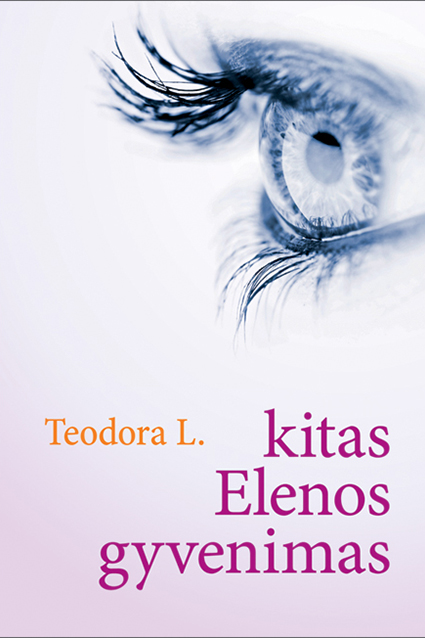
Publisher: Baltos Lankos, 2008
166 p., hardcover, 150×225 mm
ISBN 978-9955-23-157-8
Audience: Adult
Not too long ago, calla lilies were Elena’s favourite flowers.
Not too long ago, she lived a full-blooded life, running wild with her closest friend Arina, working in her art studio, and sinking into philosophical conversations with the famous artist Yuri in a cottage by the sea.
Not too long ago, Elena lived her real life…
But one day, everything changes—on that day, SOMETHING happens…
Elena—a young artist—wanders through the city of Milan, where she studied. She watches passersby, visits art exhibitions, and spends time at Domenico’s cozy café. Secretly, she listens to strangers’ conversations, leaving behind mystical sketches on napkins and beer coasters. But she didn’t return to this bustling city for leisure—she came to hide from SOMETHING that is hunting her…
TESTIMONIALS
Under a modest pseudonym, the young author clearly channels her own experiences into this short novel. There’s no need to speculate whether it is autobiographical or biographical—the story is told with sincerity, albeit in a somewhat elevated tone, leading you to believe that very little has been embellished. While it may not be particularly original for the protagonist to be a young artist—given the abundance of literature about artists in Lithuania lately—it is difficult to imagine someone with different inclinations experiencing emotions as subtly and deeply as the author desires. However, the narrator genuinely understands that the work of an artist is not merely about sighing at beautiful sunsets; it also involves intense sensory development. The unhidden sensuality and physical experiences described in the text lend it a sense of realism and a touch of the grotesque, setting it apart from traditional “women’s novels.” This time, the narrative does not center on the search for love or romantic moments; instead, these elements take a back seat, meaning you won’t encounter any idyllic scenes. In reality, such moments are quite rare.
Death occurs, and that is something the human mind cannot always grasp. All the action unfolds almost in reverse—from the present to the past and then back again—centering around this mysterious yet profoundly painful theme. For a young painter, seemingly carefree and sheltered by everyone, it becomes too much—too serious and terrifying to reconcile. Elena, accustomed to the company of her mischievous friend, aesthetic pleasures, and tasteful surroundings, and who easily wins the heart of an attractive man, ultimately realizes that she has lost something very important.
After learning of her partner’s infidelity, she departs for a distant country with pride and grace, seeking solitude to process her feelings, write, and paint her pain. Elena doesn’t yet understand that you cannot escape from yourself, and that beauty and pleasure will not overshadow her intuitive anxiety. Ultimately, she discovers that this incident of infidelity was not the most tragic event of her life; worse and more absurd things are yet to come, which she must come to terms with, forgetting the games of a cold, reserved, and spoiled princess.
Of course, one could point out flaws—at times, the character’s portrayal lacks consistency, and the descriptions of foreign travels are imbued with impeccable beauty. However, what matters most is that the author ultimately resists the temptation to idealize or moralize; she addresses controversial topics openly, without hiding anything or evading the truth. While her experiences may be somewhat exaggerated, the novel is certainly more convincing and vibrant than other recently read works by Lithuanian female authors about artists.