Stealing Chocolate
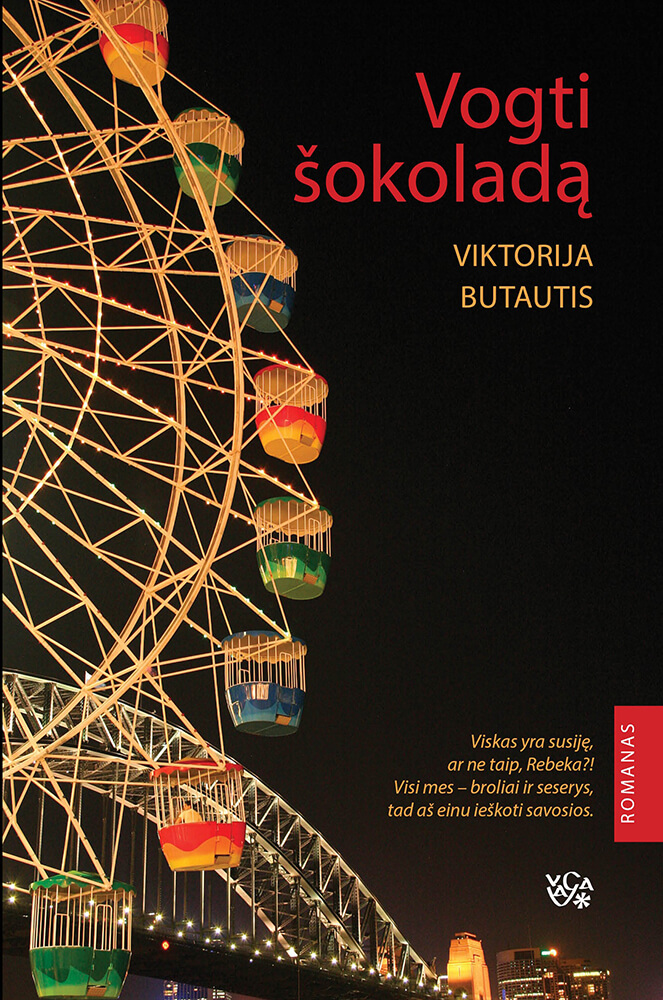
Publisher: VAGA, 2015
244 p., hardcover, 140×215 mm
ISBN 978-5-415-02386-8
Audience: Adult
Have you ever considered what it means to be born into a family whose members are not biologically connected to you? Or to discover that you have a sibling somewhere in the world, even though your biological parents have only one child – you? How is that even possible? Stealing Chocolate is a gripping and thought-provoking genetic detective story, full of twists where nothing is quite as simple as it seems.
Dylan, a young Australian, is shocked to discover he has a younger sister he’s never met. Despite being told his whole life that he was an only child and knowing his mother never gave birth to another baby, he learns that the girl is his biological sibling, meaning they share the same parents. Confused, angry, and full of questions, Dylan confronts his mother, Kamaka, who presents him with her diaries to explain the complex situation. As he delves into her writings, Dylan gradually uncovers the extraordinary truth. The unveiled facts not only explain his own difficult birth but also reveal the mystery behind why he never knew about his sister.
Are blood ties necessary to feel close? Does blood really call out to everyone in the same way?
- Dylan searches for a sister he’s never seen.
- Beka longs for a son she has no right to call her own.
- Laura loves her family, even though she’s not biologically related to any of its members.
These intertwined stories bring people together and push them apart, raising questions about family, identity, and the meaning of connection—questions many readers may never have considered.
– You see, sometimes blood ties aren’t as strong as the bond of souls. We’re here in this world together, and it doesn’t require being born of the same mother. Unity. We all connect in the same unity.
– How can you know that?
– You’ll feel it.
– What if I’m wrong?
– The path is made by walking, not by standing still.
There are no true boundaries between black and white. The donation of money, organs, or embryos is a conscious choice that spreads goodness, offers hope, and provides the chance to save lives. Or does it?
TESTIMONIALS
The book "Stealing Chocolate" could be called a genetic detective story. Its core idea empowers this: that those who are unaware or insufficiently informed about their biological roots are destined to remain unsettled until they find their kin.
The plot is highly engaging. As you read, you don’t realize when you become emotionally involved, turning into a direct participant in the unfolding events. You search alongside the main character, discovering not only lost relatives but also the deeper meaning of being with those we’ve drawn into the orbit of our lives and whom we love unconditionally.
We tend to identify with the characters in the books we read. I won’t hide it—while reading Viktorija Butautis' novel "Stealing Chocolate", I kept thinking: if this happened to me, would I set out to search for myself? For my roots? I don’t have an answer. In fact, I have even more doubts than I did when I first started reading the book. I know one thing—there is no such thing as absolute goodness, nor can there be. Often, what drives us forward is egoism—what about me, how do I feel, what do I want? If this egoistic game pulls you in too much, there’s a danger of getting lost in the process and discovering nothing at all. Or you might uncover things you never imagined existed.
The game Viktorija invented in "Stealing Chocolate" draws you in. The story grips you, sweeps you away, and doesn’t let go, lingering in your thoughts during sleepless nights. You think: what if it were your children? What then? How would you act?
There’s little discussion in Lithuania about donated embryos. But there is plenty of room for imagination. Viktorija masterfully took advantage of that, spinning an emotional tale with a non-Lithuanian pace, as if seeing Lithuania and those far away from it through foreign eyes. I liked that perspective—without excessive admiration, emotion, or nostalgia. A simple gaze into complex matters. And after all, the real beauty lies in simple things.
Partially sponsored by